
Save the Date! Downtown Imagined: Community Input Meetings on August 11!

Join us for information, conversation, and imagination at the Downtown Imagined: Community Input Meetings on Monday, August 11!
The purpose of the Downtown Imagined: Community Input Meetings are to gather community ideas and thoughts about the future of Downtown Chapel Hill and to receive community input on the updated concept and expanded draft plan that includes all of downtown.
When: Monday, August 11, 2014
What time: Two identical drop-in meetings will be held at the following times:
– 11:30 a.m. to 1:00 p.m., with a brief overview presentation at 12:15 p.m.
– 4:30 to 6:30 p.m., with a brief overview presentation at 5:15 p.m.
Where: Both meetings will be held in the Great Room at University Baptist Church, at the corner of Franklin and Columbia Streets (100 S. Columbia Street, Chapel Hill, NC 27514). To get to the Great Room, please use the church entrance that is located at the back of the church; signs will guide you to the Great Room.
Parking: For information about places to park when coming to the meeting, please visit http://www.parkonthehill.com
This planning effort expands on the early work of Rosemary Imagined. Downtown Imagined will build upon the work and community input from Rosemary Imagined to develop a plan for all of downtown. The goal of this effort is to develop a vision for the future of the downtown that emphasizes the Town’s focus on connections, choices, and community.
For more information about the Downtown Imagined process, visit http://www.rosemaryimagined.com or watch this video at http://vimeo.com/100352539
For questions, please contact Megan Wooley, community sustainability planner for the Town of Chapel Hill, and Meg McGurk, executive director for the Chapel Hill Downtown Partnership at info@rosemaryimagined.com. Megan can also be reached at 919-969-5059, and Meg can be reached at 919-967-9440.
Read all about it! Rosemary Imagined is expanding to Downtown Imagined!

We have some exciting news! Rosemary Imagined is expanding to become Downtown Imagined!
Starting in mid-July, the Rosemary Imagined planning process (which focused on developing a vision and plan for Rosemary Street) is expanding to include all of downtown, including Franklin Street. The newly named – “Downtown Imagined” – is the planning process that will build upon the work and community input from Rosemary Imagined to develop a plan for all of downtown!
Want to learn more? Check out this 2-minute VIDEO!
We want to hear your ideas for Downtown Chapel Hill. We will be holding two informal, drop-in sessions, so please come and share your ideas for Franklin, Rosemary, Henderson, Church, and all the streets that make our downtown great.
When are the drop-in sessions?
– Monday, July 21st from noon-1:00pm at Lime Fresh Mexican Grill, 140 W. Franklin Street
– Wednesday, July 23rd from 5:00-6:00pm at Tru Deli, 114 Henderson Street
For information about places to park when coming to the sessions, please visit http://www.parkonthehill.com
Can’t make either of these sessions? No worries! You can contact us through email or by phone to share your ideas. To reach Meg and Megan, email info@rosemaryimagined.com or call Meg McGurk at 919-967-9440 and Megan Wooley at 919-969-5059.
In early August, we will be holding a large community meeting to gather more thoughts about downtown Chapel Hill and to share a draft concept map and plan for downtown. More information coming soon.
For more information about the Downtown Imagined process, visit http://www.rosemaryimagined.com
We hope to see you soon!
Share your thoughts! Revised Draft Rosemary Street Vision and Implementation Plan!

Share your thoughts about the revised draft concept and plan for Rosemary Street!
What is in the revised draft Rosemary Street Vision and Implementation Plan?
The Rosemary Street Vision and Implementation Plan consists of two parts:
1) The draft concept which is a map of Rosemary Street that identifies:
– Potential redevelopment sites along Rosemary Street;
– Locations of parks and greenways;
– New pedestrian and bicycle connections as well as long-term opportunities for car connections;
– And lots of other fun and neat things!
2) Twenty-one visions for the future of Rosemary Street. These visions include a vision statement, “next steps,” and leads and partners for implementation and are organized based on the themes from the Chapel Hill 2020 comprehensive plan.
How was the revised draft Rosemary Street Vision and Implementation Plan developed?
In April of 2014, we began gathering input and thoughts from the community about the three draft concepts and the draft vision plan for Rosemary Street (for copies of these drafts, see below). We received a lot of great feedback, and thank you to everyone who attended the meetings!
We have taken the input and revised the three draft concepts into one draft concept and have updated the draft vision and implementation plan. We would now like your feedback about the revised draft concept and draft vision plan!
How can I give my input?
Please let us know if you have thoughts to share about the revised draft concept and plan! You can email or call Megan Wooley (Town of Chapel Hill) or Meg McGurk (Chapel Hill Downtown Partnership). Megan W can be reached at 919-969-5059, and Meg M can be reached at 919-967-9440. Both can be reached through email at info@rosemaryimagined.com
If your neighbors or organization would like to meet with Megan and Meg to share your thoughts, please let us know, and we would be happy to meet with you!
Next Steps
We are currently in the process of gathering community input about the revised draft concept and the revised draft Rosemary Street Vision and Implementation Plan! We will continue to seek community feedback about the revised draft concept and plan until the beginning of August.
In early August, we will begin working on draft concepts and a plan for Franklin Street, and we will be seeking the community’s involvement and input about the future of Franklin Street and the whole downtown area. We are anticipating going to the Council in late 2014 or early 2015 with the visions and concept for Rosemary Street coupled with the visions and concept for the whole of downtown.
Please stay tuned for upcoming meetings and events!
For more information about the Rosemary Imagined process, visit http://www.rosemaryimagined.com
Save the Date! Rosemary Imagined: Second Community Review Meeting on June 9

Join us for information, conversation, and imagination at the Rosemary Imagined: Second Community Review Meeting on Monday, June 9!
The purpose of the Rosemary Imagined: Second Community Review Meeting is to gather community feedback on the revised draft concept and the revised draft Rosemary Street Vision and Implementation Plan.
In April, we began gathering input and thoughts from neighborhood and downtown residents, business owners, community members, and many others about the three draft concepts and the draft vision plan for Rosemary Street. We received a lot of great feedback, and thank you to everyone who attended the meetings! We have taken the input and revised the three draft concepts into one draft concept and have updated the draft vision plan. We would now like your feedback about the revised draft concept and draft vision plan!
Two drop-in meetings will be held on June 9 and will be at the following times:
– 11:30 a.m. to 1:00 p.m., with a brief overview presentation at 12:15 p.m.
– 4:30 to 6:30 p.m., with a brief overview presentation at 5:15 p.m.
Both meetings will be held in the Sky Lounge at Greenbridge, 601 Rosemary Street, Chapel Hill, NC 27516. The format of these two meetings will be identical; the purpose of holding two meetings is to provide multiple opportunities for participants to attend and provide their input.
For information about places to park when coming to the meeting, please visit http://www.parkonthehill.com
Rosemary Imagined is an innovative community-led planning initiative that will refine our thinking of how Rosemary Street fits into the development and growth of downtown Chapel Hill. This goal of this effort is to develop a vision for the future of the Rosemary Street corridor that emphasizes the Town’s focus on connections, choices, and community.
For more information about the Rosemary Imagined process, visit http://www.rosemaryimagined.com
For questions, please contact Megan Wooley, housing and neighborhood services planner for the Town of Chapel Hill, and Meg McGurk, executive director for the Chapel Hill Downtown Partnership at info@rosemaryimagined.com. Megan can also be reached at 919-969-5059, and Meg can be reached at 919-967-9440.
Review the draft Rosemary Imagined Concepts and draft Vision Plan!
Thank you to everyone who attended the Rosemary Imagined: First Community Review Meeting this morning! We had a great turnout and received lots of good ideas, feedback, and questions! We will be holding another session this evening from 6:00-8:00pm in the Sky Lounge at Greenbridge (601 Rosemary Street) – you should drop by!
During the meeting, participants provided thoughts and feedback about the three draft concepts (titled Option A, Option B, and Option C) and the draft Rosemary Street Vision and Implementation Plan.
Draft Concepts – Options A, B, and C
The draft concepts have been developed by the consulting team from KlingStubbins, a planning firm located in Raleigh. These concepts are based upon the community input and feedback received during the community meetings held in the summer and fall of 2013 and from meetings with property owners.
For a copy of the draft concepts, please click here: DRAFT CONCEPTS
Please review these concepts and provide your thoughts and ideas! What do you like about these concepts? What are you concerned about? Are these concepts missing anything? Let us know!
Send your thoughts and ideas to Meg McGurk and Megan Wooley at info@rosemaryimagined.com
Draft Rosemary Street Vision and Implementation Plan
During the Rosemary Imagined community meetings, many participants shared visions for and ideas about the Rosemary Street of the future. These ideas were pulled together to create the draft Rosemary Street Vision and Implementation Plan.
For a copy of the draft Rosemary Street Vision and Implementation Plan, please click here: DRAFT PLAN
The plan outlines nineteen visions for Rosemary Street and provides a vision statement, a lead, partners, and next steps for each of the visions.
We would like your feedback about this draft plan! Do you have ideas for implementation strategies or next steps? Would you like to be an implementation partner? Is the draft plan missing anything? Let us know!
Please send your ideas to Meg McGurk and Megan Wooley at info@rosemaryimagined.com
Next Steps
We are currently in the process of gathering community input about the draft concepts and the draft Rosemary Street Vision and Implementation Plan!
In early to mid May, the three draft concepts will be revised to develop one draft concept. A Second Community Review meeting will be held in late May or early June to receive community feedback about the revised draft concept and revised draft Rosemary Street Vision and Implementation Plan.
Upcoming Rosemary Imagined Meeting! Join Us on April 10th!

Join us for information, conversation and imagination at the Rosemary Imagined: First Community Review Meeting on Thursday, April 10!
The purpose of the Rosemary Imagined: First Community Review Meeting is to review the two draft concepts for Rosemary Street. These concepts are being drafted by the consulting team from KlingStubbins, a planning firm located in Raleigh, based upon the community input and feedback received during the Rosemary Imagined meetings held in the summer and fall of 2013.
Two drop-in meetings will be held on April 10 and will be at the following times:
• 11:30 a.m. to 1 p.m., with a brief overview presentation at 12:15 p.m.
• 6 to 8:00 p.m., with a brief overview presentation at 6:45 p.m.
Both meetings will be held in the Sky Lounge at Greenbridge, 601 Rosemary Street, Chapel Hill, NC 27516. The format of these two meetings will be identical; the purpose of holding two meetings is to provide multiple opportunities for participants to attend and provide their input.
During the meeting, we will gather community comment about the two draft concepts. The concepts will then be revised to develop one draft concept. A Second Community Review meeting will be held in late May or early June to receive community feedback about the revised draft concept.
Rosemary Imagined is an innovative community-led planning initiative that will refine our thinking of how Rosemary Street fits into the development and growth of downtown Chapel Hill. This goal of this effort is to develop a vision for the future of the Rosemary Street corridor that emphasizes the Town’s focus on connections, choices, and community.
For more information about the Rosemary Imagined process, visit http://rosemaryimaginedblog.com/
For questions, contact Megan Wooley, housing and neighborhood services planner for the Town of Chapel Hill, and Meg McGurk, executive director for the Chapel Hill Downtown Partnership at info@rosemaryimagined.com. Megan can also be reached at 919-969-5059, and Meg can be reached at 919-967-9440.
Greetings from the Rosemary Imagined Project Team!
We hope that everyone’s 2014 is off to a good start! We are looking forward to lots of neat ideas, continued discussions, and fun gatherings in this new year.
We wanted to provide you with an update about the Rosemary Imagined project and let you know where we will be heading in 2014.
First, thank you to everyone who has participated in this planning effort thus far. We appreciate all the time, energy, and creative thinking that community members have dedicated to this process. We are excited about all the ideas we gathered through the polling sessions, pitch meetings, and conversations last year.
If you are new to this project, Rosemary Imagined is an innovative community-led planning initiative that will refine our thinking of how Rosemary Street fits into the development and growth of downtown Chapel Hill. This goal of this effort is to develop a vision for the future of the Rosemary Street corridor that emphasizes the Town’s focus on connections, choices, and community.
To see what’s been done so far, visit http://rosemaryimaginedblog.com/
Over the next few months, the Rosemary Imagined Project Team will be working with a consulting team, located in Raleigh, from the planning firm Kling Stubbins to take the input we received during the community sessions and develop these into two concepts. We will be holding a community meeting called the “First Community Review Meeting” on April 10th to receive your input and ideas about these two concepts. More information about the April 10th meeting will be coming soon.
After the April meeting, we will refine the two concepts into one concept, and we will again ask for your feedback about this concept during the “Second Community Review meeting” to be held in May/June.
So you may be thinking, this all sounds great, and I want to continue to be involved! How can I make that happen?
Here are a few ways to stay involved:
– If you have thoughts and want to share them, email Megan Wooley and Meg McGurk at info@rosemaryimagined.com
– Mark your calendar for the First Community Review Meeting on April 10th; more information coming soon
– Stay informed with the Rosemary Imagined happenings through the Rosemary Imagined blog which can be found at http://www.rosemaryimaginedblog.com
We anticipate completing the Rosemary Imagined planning effort by Fall of this year, and we are excited about the upcoming months and the work ahead!
Thanks for reading, and please let us know if you have any questions!
Yours in information, conversation, and imagination,
The Rosemary Imagined Project Team
– Megan Wooley, Housing and Neighborhood Services Planner II, Town of Chapel Hill
– Meg McGurk, Executive Director, Chapel Hill Downtown Partnership
– Mary Jane Nirdlinger, Director of Policy and Strategic Initiatives, Town of Chapel Hill
– Dwight Bassett, Economic Development Officer, Town of Chapel Hill
Adopted Central West Small Area Plan now available!
Hot off the web! The adopted Central West Small Area Plan is now available online! Visit www.townofchapelhill.org/centralwest to download the Small Area Plan.
On Nov. 26, 2013, the Town Council adopted the Central West Small Area Plan that was developed by the Central West Steering Committee. The committee worked with community members and residents from December 2012 to November 2013 to develop the small area plan.
The Central West Focus Area is located near the intersection of Martin Luther King Jr. Boulevard and Estes Drive and extends from Carrboro to the west, Franklin Street to the east, Homestead Road to the north, and Maple Drive to the south. For a map, please visit the Central West Small Area Plan webpage.
The Central West Focus Area was identified as a “future focus area” during the Chapel Hill 2020 comprehensive planning process due to the known development pressures in the area. The plan provides a vision for future land use, transportation, environmental, and streetscape decisions.
For more information about the Central West Focus Area process and to download the small area plan, visit www.townofchapelhill.org/centralwest
For questions, contact Megan Wooley, housing and neighborhood services planner, at compplan@townofchapellhill.org or 919-969-5059.
Thank you to the Steering Committee and to all who participated in this planning effort. We appreciate the time, energy, and creativity that you dedicated to this process!
OBEY CREEK COMPASS COMMITTEE PROVIDES FEEDBACK ON CONCEPTS, HOLDS A PUBLIC DISCUSSION, AND CONTINUES TO WORK THROUGH KEY IDEAS
On October 7th, the Development Team presented three design concepts to the Obey Creek Compass Committee. That night and the following morning, Committee members gave feedback and asked questions of the various experts on the Technical Team, who were back in town for the work sessions.  Equipped with the feedback, the Technical Team immediately got to work with developers to revise the designs. At the end of three days, the developers presented another iteration of the concept which reflected much of the feedback recieved. To review the design concept, go to the Obey Creek Compass Committee site.
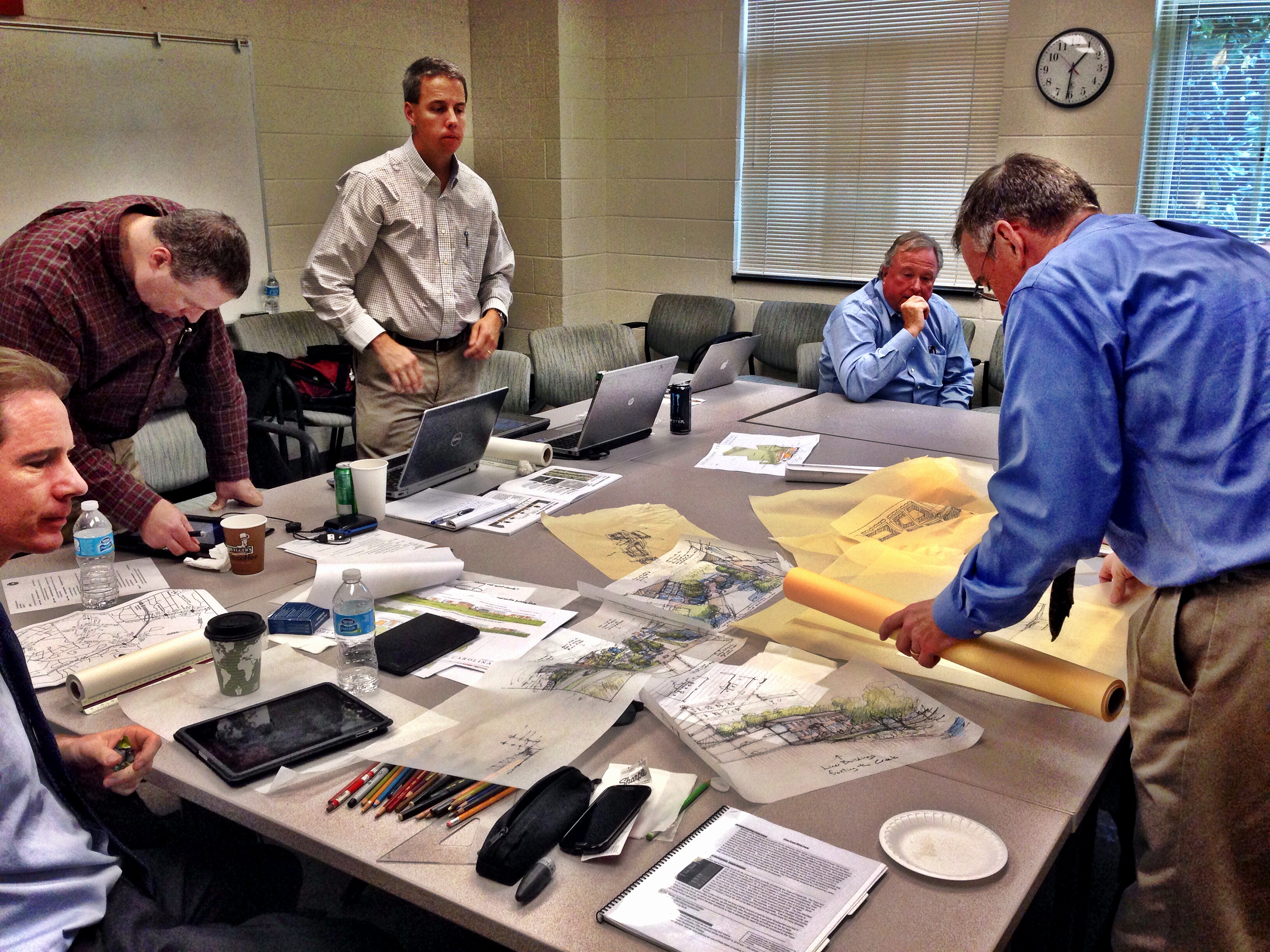
On October 16th, it was time for more public feedback! The Development Team provided information on the current concept, and then attendees, facilitated by Compass Committee members, engaged in discussion. They worked through several key questions about the project:
- What are you most excited about?
- What are you most concerned about?
- What 1-2 things do you wish you had more information about?
- What do you want to keep about the proposal?
- What do you wish was different?
Attendees of the public forum reported on key themes including enthusiasm over the preservation of open space, the potential of economic benefit and concern over traffic congestion, movement and mobility. To read more about the themes that emerged, click here.

Next, on October 19th, the Obey Creek Report Drafting Subcommittee got to work! Subcommittee members Aaron Nelson, Alan Rimer, and Jeanne Brown concluded that they will report on guiding principles, ways to accomplish the principles, criteria to compare, and questions about information that is still needed.
The following week, on October 22th the Committee was back together again. This time working first as a larger group then in small groups to examine the principles associated with physical development, development impacts, mobility, and connectivity. Several ideas emerged including a preference for a compact design and feel similar to Southern Village, the importance of pedestrian and bicycle connectivity, and the desire to balance green building practices with affordability. More information on this discussion is available here. Then, on October 29th the Committee reconvened to further discuss the principles from the previous meeting and to note points of agreement, disagreement, and places where further discussion was needed.
On November 9th, the full Committee met again. The Drafting Subcommittee reported on their work and the group discussed the use and traffic mobility sections of the report. At the end of the meeting, the decision was made to petition Council to extend their work deadline from the end of November to a January meeting in order to have two additional meetings and an extended public comment period.
The next meeting will be held on November 20th at the Public Library from 6:30-9:00pm. The first 30 minutes will be dedicated to public comment. The current version of the preliminary working draft can be found on the Obey Creek Compass Committee’s webpage.
Draft Central West Small Area Plan to be Considered by Council on Nov. 26
On Tuesday, November 26th, the Town Council will be reviewing the draft Central West Small Area Plan and will be considering possible adoption of the draft Small Area Plan. If adopted, the Central West Small Area Plan would become a component of the Chapel Hill 2020 comprehensive plan.
During the November 7th Steering Committee meeting, the Central West Steering Committee reviewed the comments received about the draft Small Area Plan. For items that required additional discussion and decisions, the Steering Committee decided how to incorporate these items into the draft Small Area Plan.
At the end of the November 7th meeting, the Steering Committee endorsed the draft Central West Small Area Plan with the proposed revisions. The Steering Committee requested that the draft Small Area Plan be forwarded to the Council for their consideration.
To view the draft Central West Small Area Plan and proposed revisions, see below:
- Draft Central West Small Area Plan (Dated October 11, 2013)
- Proposed Revisions and Amendments to the draft Small Area Plan (Approved by the Steering Committee on November 7th)
The Council meeting will begin at 6:00pm and will be held at the Southern Human Services Complex, 2501 Homestead Road, Chapel Hill.
For more information about the Central West process, visit www.townofchapelhill.org/centralwest
Images
On Monday, January 13th the Chapel Hill Town Council voted to accept the Obey Creek Compass Committee’s report, proceed with the Obey Creek development process, and add in a new checkpoint. During Phase 2, the Technical Team will work with developers and Town staffers to continue to revise the proposed development plan and study how it will impact the surrounding area. The study will explore potential effects on traffic, school capacity, the environment and other concerns. At the end of that phase, the Council will review the data and vote whether or not to enter into direct negotiations with developers at East West Partners.
During the meeting, The Council praised the Committee’s work, which included participating in 22 meetings starting in July, serving as a conduit to the public and, producing a valuable report. Council member Donna Bell, the Council liaison to the Obey Creek Compass Committee, expressed her appreciation of their work. Thanks Obey Creek Compass Committee!
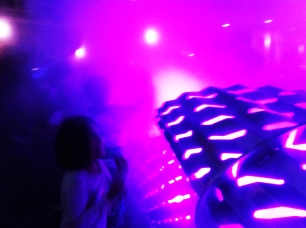
Enjoying the new art sculpture with colorful lighting and fog effects at downtown Chapel Hill’s new public plaza at 140 West Franklin.
“Exhale” consists of a folded and layered perforated metal skin that allows for fog to emanate through the textured surfaces of the piece. The amount of fog emanating from the sculpture is controlled by a sophisticated computerized weather station that reads the wind velocity and adjusts the amount of fog accordingly.
Artist Mikyoung Kim states: “Exhale moves beyond art as object, and suggests a point of transition, interaction, and activation – a place to observe people utilizing the various zones of the plaza, making them an active, integrated part of the art piece.”
To view the schedule of events at 140 West Plaza, visit http://www.townofchapelhill.org/140west
 2020 Buzz